Is Eating Before Bed Bad? The Truth About Late-Night Eating and Weight Gain
By Editorial Team

Why This Question Isn’t as Simple as It Sounds
“Don’t eat before bed—you’ll gain weight.”
It’s one of the most persistent rules in nutrition. Simple, memorable—and often misleading.
In clinical practice, the relationship between nighttime eating, metabolism, and weight regulation is far more nuanced. Patients who eat late are often told to stop. Yet when you look closely, timing alone is rarely the root problem. Instead, it is what is eaten, how much is eaten, and why it is eaten that determines outcomes.
This article breaks down the physiology, behavioral patterns, and clinical evidence behind eating before bed—so you can make decisions grounded in biology, not myth.
Is Eating Before Bed Bad? (The Short Answer)
No—eating before bed is not inherently bad.
However, it can negatively affect health depending on three variables:
- Total daily calorie intake
- Food composition
- Timing relative to sleep and circadian rhythm
In some cases, eating before bed may even be beneficial—particularly for blood sugar regulation, sleep stability, and muscle recovery.
What Happens in Your Body When You Eat Before Bed
1. Your Metabolism Does Not “Shut Down” at Night
A common misconception is that the body stops processing food during sleep. This is physiologically inaccurate.
Even during sleep, the body maintains:
- Basal metabolic activity
- Cellular repair processes
- Brain glucose consumption
Energy expenditure does decline slightly at night, but digestion and nutrient metabolism continue.
2. Circadian Rhythm Shapes How You Process Food
The more relevant factor is your circadian rhythm—your internal biological clock.
Your body is metabolically optimized for:
- Eating during daylight
- Fasting during nighttime
Hormonal shifts include:
- Melatonin increases → promotes sleep
- Insulin sensitivity decreases → reduced glucose handling
Clinical implication: The same meal eaten at night may produce higher blood glucose levels than when eaten earlier in the day.
3. Insulin Sensitivity Declines in the Evening
Studies show that insulin response is less efficient at night. This means:
- Glucose remains elevated longer
- Fat oxidation may decrease
- Energy is more likely to be stored than used
This does not automatically lead to weight gain—but it does influence metabolic efficiency.
4. Appetite Hormones Shift at Night
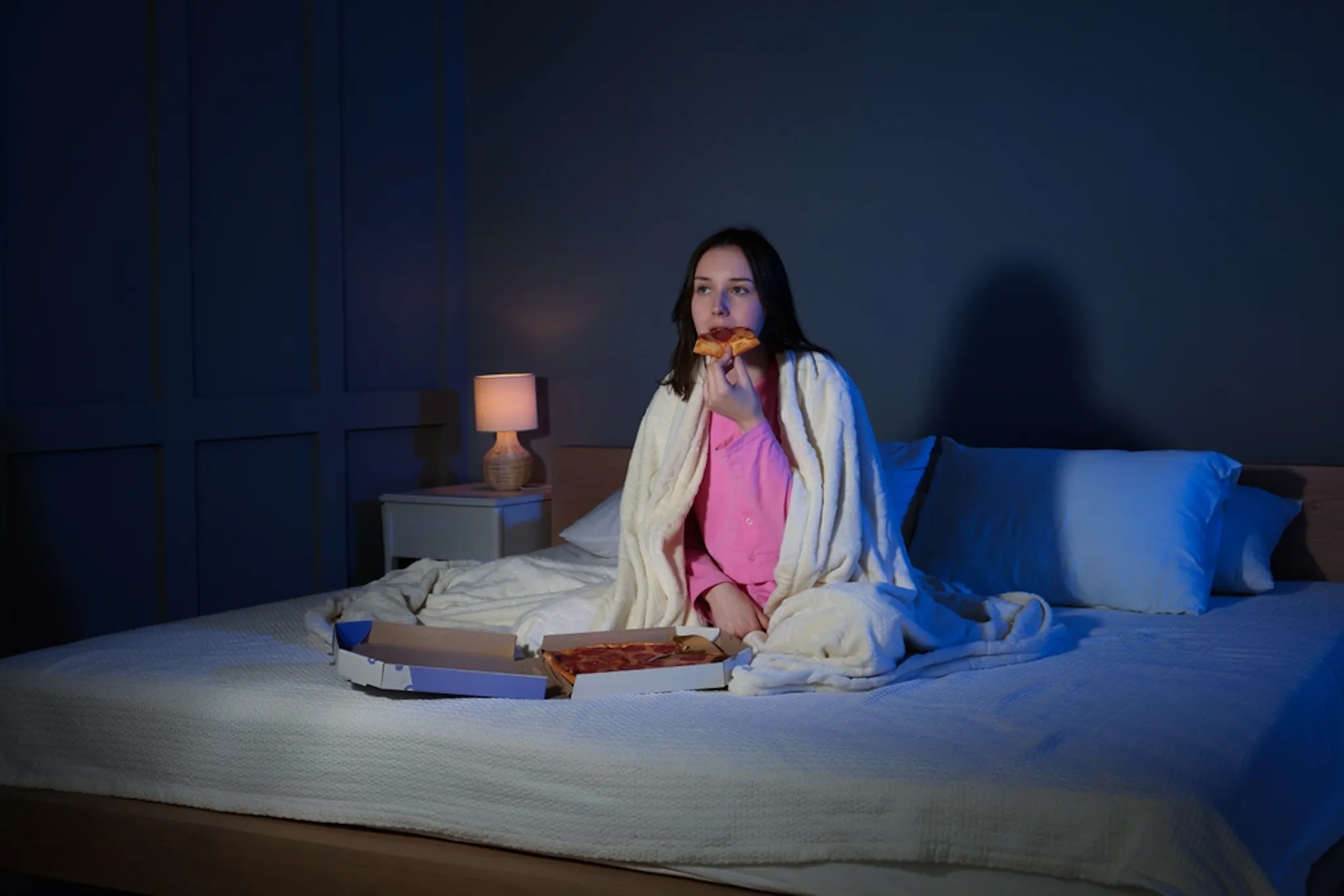
Two key hormones change in the evening:
- Ghrelin (hunger hormone) → tends to increase
- Leptin (satiety hormone) → signaling may weaken
This creates a perfect setup for:
- Cravings
- Overeating
- Preference for high-calorie foods
Does Eating Before Bed Cause Weight Gain?
The Core Truth: Timing Alone Does Not Cause Weight Gain
Weight gain is driven primarily by chronic calorie surplus, not meal timing.
You do not gain fat simply because you ate at 10 PM instead of 7 PM.
Why Late-Night Eating Is Still Associated with Weight Gain
The association exists—but the mechanism is behavioral, not magical.
Late-night eating often involves:
- Mindless snacking
- Ultra-processed, high-calorie foods
- Additional meals beyond daily needs
In clinical observation, nighttime eating is often a symptom of poor dietary structure earlier in the day.
Emerging Evidence: Timing Still Has a Secondary Role
While calories remain primary, newer research suggests:
- Reduced fat oxidation at night
- Less efficient metabolic processing
- Greater glucose excursions
These effects are subtle but may compound over time.
How Eating Before Bed Affects Sleep
1. Foods That Disrupt Sleep
Certain foods impair sleep quality:
- High sugar → blood sugar spikes and crashes
- High fat → delayed gastric emptying
- Caffeine (including chocolate and tea)
- Alcohol → fragmented sleep
Related Read: 15 Common Foods That Ruin Your Sleep (And What to Eat Instead)
2. Acid Reflux and Digestive Discomfort
Eating too close to bedtime increases risk of:
- Gastroesophageal reflux (GERD)
- Heartburn
- Sleep disruption
This is especially relevant when lying down shortly after eating.
3. When Food Can Improve Sleep
Strategically chosen foods can support sleep:
- Tryptophan-containing foods (e.g., dairy, nuts)
- Small, balanced snacks that stabilize blood sugar
In some individuals, going to bed hungry leads to:
- Night awakenings
- Poor sleep continuity
When Eating Before Bed May Be Beneficial
1. Preventing Nighttime Overeating Cycles
Skipping meals during the day often leads to:
- Intense evening hunger
- Loss of portion control
A structured evening snack can prevent this.
2. Blood Sugar Stability
For some individuals—especially those with:
- Insulin resistance
- Reactive hypoglycemia
A small pre-bed snack may stabilize overnight glucose levels.
3. Muscle Recovery and Protein Synthesis
Emerging evidence supports pre-sleep protein intake, particularly casein protein, for:
- Muscle repair
- Overnight protein synthesis
This is especially relevant for:
- Athletes
- Individuals in resistance training programs
4. Sleep Support Through Nutrient Timing
Small snacks combining:
- Protein
- Healthy fats
- Low-glycemic carbohydrates
may promote more stable sleep patterns.
The Worst Foods to Eat Before Bed
Avoid foods that:
- Spike blood sugar rapidly
- Delay digestion
- Trigger reflux
Examples:
- Sugary desserts
- Fried or fatty foods
- Spicy meals
- Acidic foods (e.g., citrus-heavy meals)
- Hidden caffeine sources
The Best Foods to Eat Before Bed (If You’re Hungry)

A good bedtime snack should:
- Be light (200–300 calories)
- Combine protein + fiber + healthy fat
- Avoid rapid glucose spikes
Examples:
- Greek yogurt with nuts
- Banana with peanut butter
- Cottage cheese
- Kiwi (linked to improved sleep in some studies)
Similar Read: Natural Sleep Aids: The Most Effective Remedies Backed by Science
How Long Before Bed Should You Stop Eating?
A practical guideline:
- 2–3 hours before sleep for full meals
- Light snacks can be consumed closer to bedtime
This reduces:
- Reflux risk
- Digestive burden
- Sleep disruption
Who Should Avoid Eating Before Bed?
Individuals with:
- GERD or chronic reflux
- Poor glycemic control
- Sleep disorders
may benefit from avoiding late meals.
Who Might Benefit from Eating Before Bed?
- Athletes
- Individuals under-eating during the day
- Those with nighttime blood sugar drops
- Patients on structured metabolic plans
The Real Problem: Behavioral Patterns Behind Late-Night Eating
1. Emotional and Stress-Driven Eating
Evening hours often coincide with:
- Psychological fatigue
- Reduced discipline
- Reward-seeking behavior
2. Screen-Time Snacking
Eating while:
- Watching TV
- Scrolling
leads to:
- Increased calorie intake
- Reduced satiety awareness
3. Poor Daytime Nutrition
The most common pattern:
- Undereating → evening hunger → overeating
Fixing daytime nutrition often eliminates late-night issues entirely.
Practical Guidelines: A Clinical Framework
1. The Decision Rule
- If you are physically hungry → eat
- If you are bored or stressed → pause
2. The Ideal Bedtime Snack Formula
- Protein + fiber + healthy fat
- Low sugar, low processing
3. Portion Control
- Keep snacks within 200–300 calories
4. Front-Load Your Nutrition
Eat more earlier in the day to:
- Reduce nighttime cravings
- Improve metabolic efficiency
Common Myths—Debunked
- “Food turns to fat at night” → False
- “Metabolism shuts down during sleep” → False
- “Eating late always causes weight gain” → Misleading
- “Carbs at night are bad” → Context-dependent
FAQs
Is it bad to eat right before sleeping?
Not inherently, but large or heavy meals can disrupt sleep and digestion.
Will I gain weight if I eat at night?
Only if it leads to a calorie surplus over time.
What foods are safe before bed?
Light, balanced snacks with protein and low sugar.
Can eating before bed help sleep?
Yes, in some cases—especially when it prevents hunger-related awakenings.
How long before bed should I stop eating?
Ideally 2–3 hours for full meals.
Key Takeaways
- Eating before bed is not inherently harmful
- The real risks come from:
- Overeating
- Poor food choices
- Disrupted eating patterns
- Strategic nighttime eating can support:
- Sleep
- Metabolic stability
- Recovery
Meto Clinical Perspective
At Meto, we approach nutrition through a metabolic lens—not isolated rules.
Late-night eating is rarely the problem in itself. It is often a signal of:
- Poor meal structure
- Hormonal dysregulation
- Behavioral patterns
The goal is not restriction—but alignment:
- Align eating patterns with biology
- Align food choices with metabolic needs
- Align habits with long-term sustainability
Recommended For You
FDA Peptide Decision 2026: The Final Vote on BPC-157, TB-500, MOTS-c and More — What It Means for You
Across July 23–24, 2026, the FDA's advisory committee recommended six peptides for legal compounding — BPC-157, KPV, TB-500, MOTS-c, epitalon, and Semax — and rejected one, emideltide (DSIP). Here's the complete scorecard, what it means, what it doesn't, and what to do next.
FDA Advisory Committee Votes to Ease Peptide Restrictions: What the July 2026 Vote on BPC-157, KPV, TB-500, and MOTS-c Actually Means
An FDA advisory committee voted on July 23, 2026 to recommend easing restrictions on four peptides — BPC-157, KPV, TB-500, and MOTS-c. Here's what that vote actually does, why it isn't an approval, and what it means for your health.

GLP-1 and Fertility: Emerging Evidence for Women With Obesity, Insulin Resistance, and PMOS
GLP-1 fertility research in women with PMOS and insulin resistance shows consistent improvements in ovulation, menstrual regularity, and androgen levels. This deep dive covers the clinical evidence, mechanisms, who benefits most, and how to approach a PMOS fertility metabolic plan.